Urena Coins: Solving the Allowance Friction with a Digital IOU System
Managing allowances with physical cash is a constant friction point. It requires having specific denominations on hand and keeping a mental tally of who did what chore. I built a digital IOU system to remove this overhead and give my kids a self-service way to track their earnings.
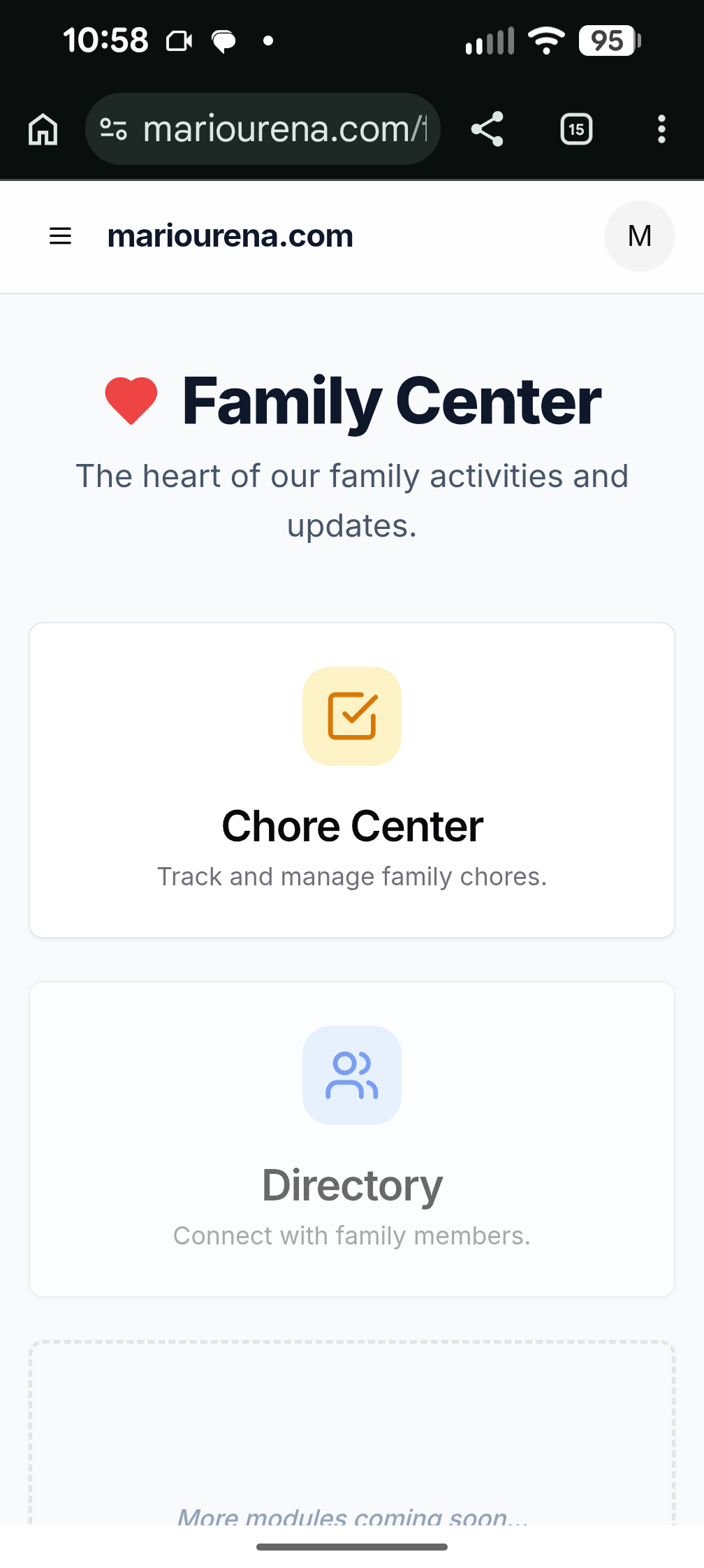
The central interface for viewing coin balances and pending approvals.
The Problem: Unscalable Verbal Requests
Our previous system involved yelling chore requests up the stairs. This proved unscalable. It resulted in forgotten tasks, disputed completion dates, and a general lack of accountability. I wanted a system where the kids could see exactly what was expected of them and notify me when a task was finished.
The core concept is "Urena Coins." These are digital units tied to a future USD conversion. By using a digital currency, I don't need to find five singles every Saturday. We can settle up at a later date while the kids maintain a real-time view of their purchasing power.
Technical Implementation
The project uses a standard **Next.js** and **Postgres** stack. I chose **Drizzle ORM** for database interactions because it maps closely to SQL and avoids the runtime overhead of heavier abstractions. The entire application is housed in a **Turbo** monorepo to simplify sharing types between the frontend and the database schema.
Self-Service Submissions
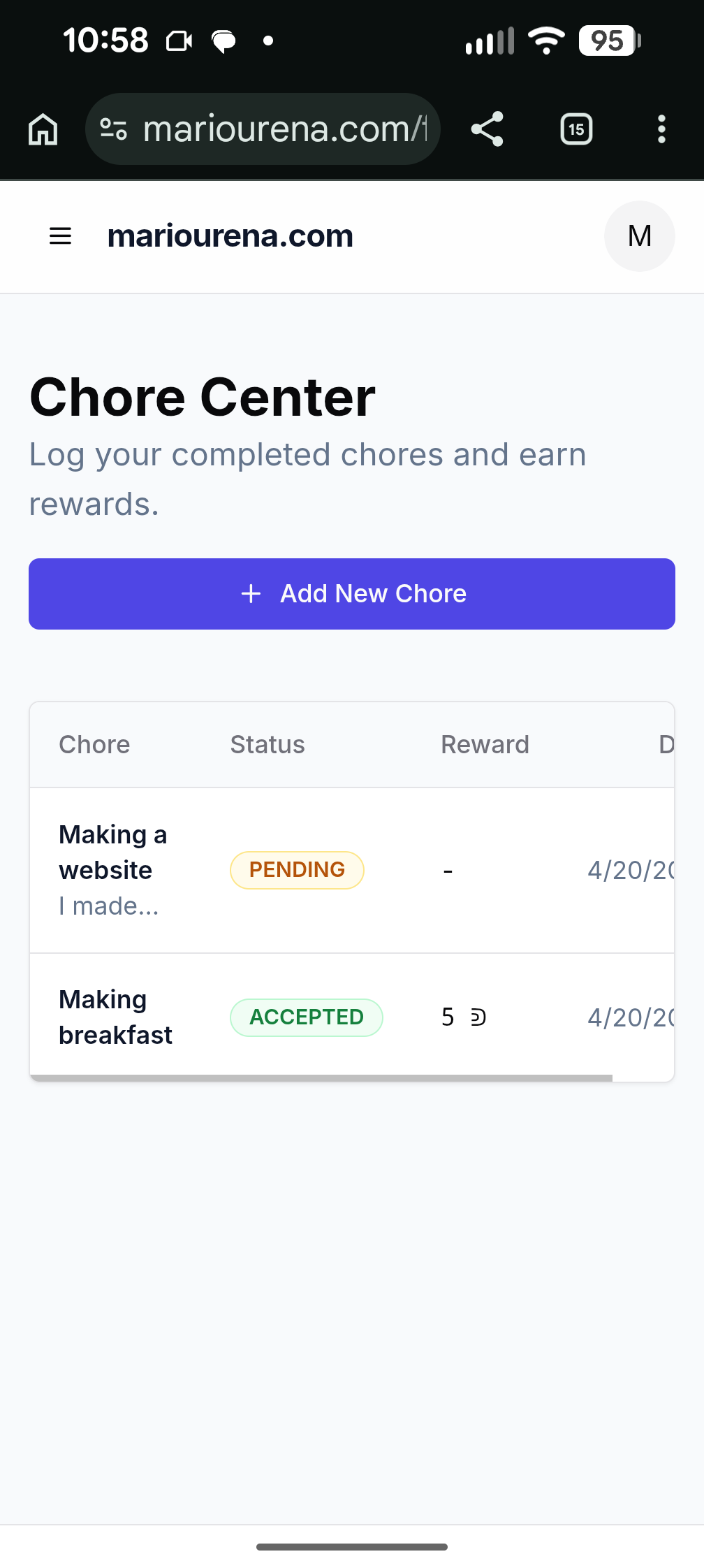
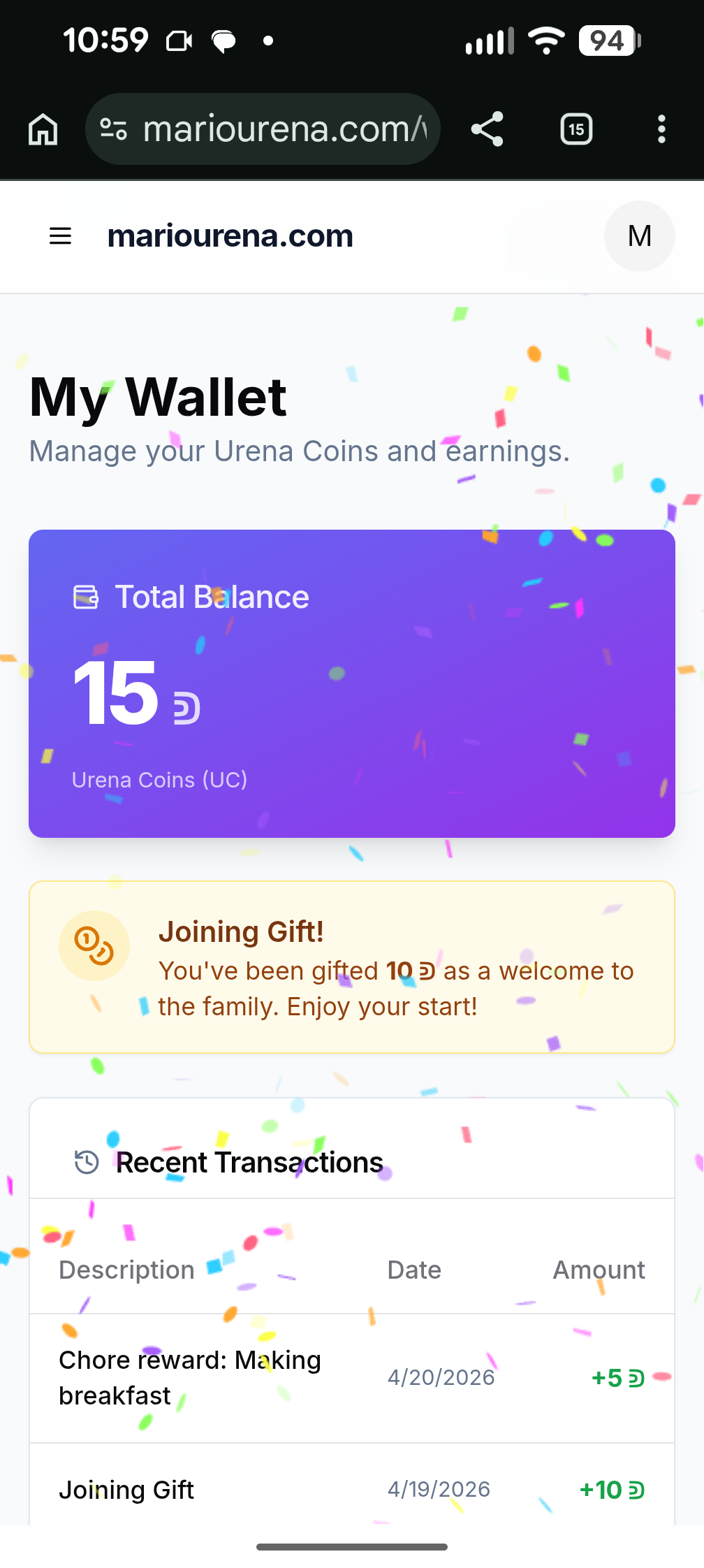
The kids have a dedicated interface to view assigned chores. When they finish a task, they submit a photo as proof. This creates an audit trail and removes the need for me to manually verify every chore the moment it happens.
Note: Don't look too closely at the CSS grid here. It works on my phone, and that is the only SLA I care about right now.
How the Economy Works
Every user has a personal wallet. When an admin approves a chore, the transaction is logged and the balance is updated. This transparency helps the kids understand the direct link between effort and reward.
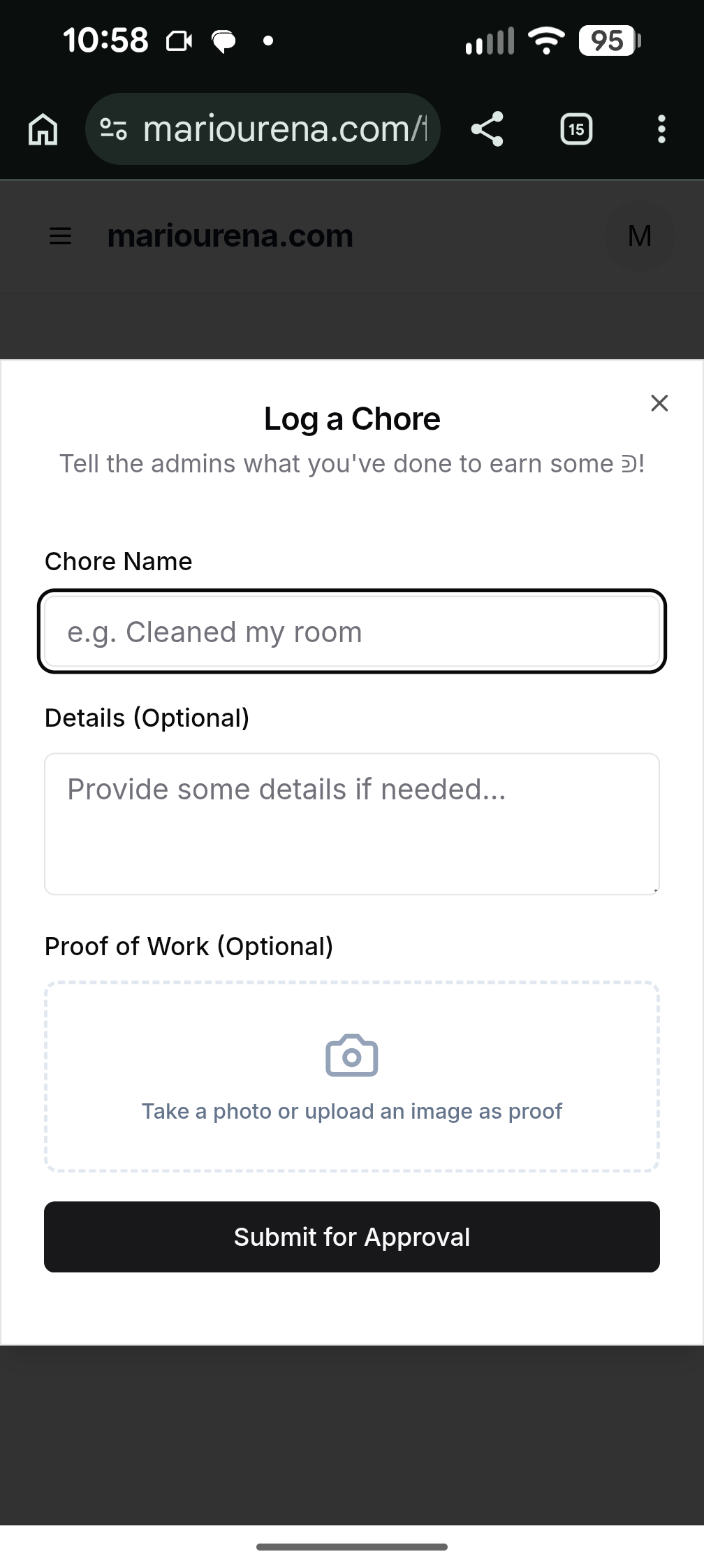
The wallet view provides a summary of all transactions and current holdings.
Pragmatic Constraints
I intentionally kept the first version simple. I can write a perfectly typed API route, but I still can't convince the kids that putting a plate in the sink is not the same as washing it. The tech solves the tracking problem, but the parenting still requires manual intervention.
As is tradition with modern JavaScript frameworks, the initial deployment was delayed by an hour due to a minor dependency conflict. Once the environment variables were sorted, the system was stable.
The Roadmap
The current system works for our immediate needs, but I have several updates planned for the coming months.
- **AI Image Validation:** I plan to integrate an AI model to automatically check chore photos. This will further reduce the manual approval load.
- **Salary Model:** We are moving toward a base "salary" allowance. Kids will need to meet a quota of standard chores to earn their base pay.
- **Automated Redemptions:** A way for them to request a USD cash-out directly through the app.
In conclusion, Urena Coins has successfully removed the friction of physical cash from our household. It is a straightforward solution to a common family logistics problem. I will continue to iterate on the feature set as the kids provide feedback on the user experience.